 - Copy.webp)
 - Copy.webp)
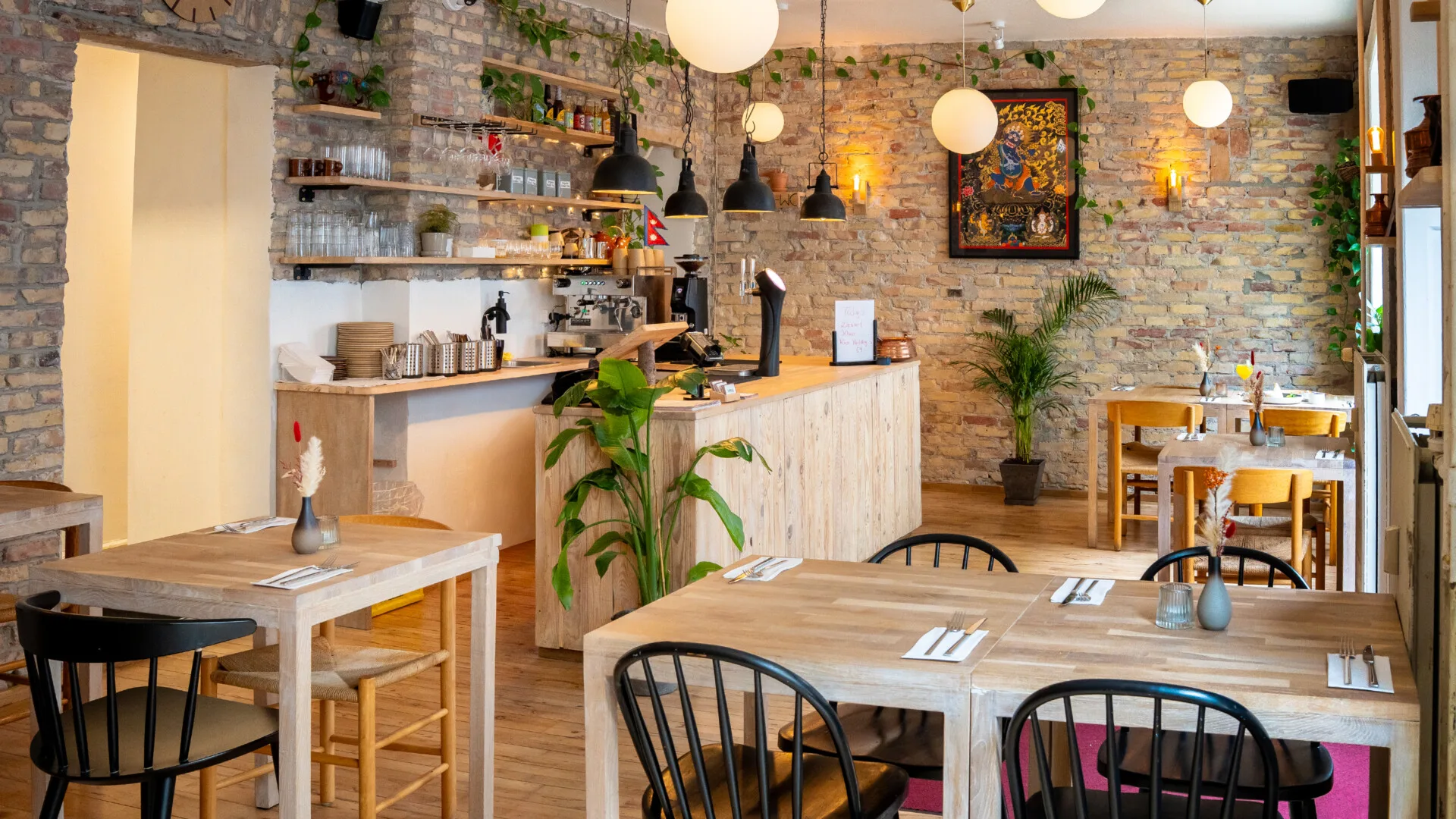
Sitting down to Nepali food for the first time can be slightly disorienting. The menu is full of words you have never seen, half of them look like they might be Indian, half like they might be Chinese, and there is no obvious place to start. Most people default to the safest-sounding thing and miss the point entirely.
This guide fixes that. Below are ten traditional Nepali dishes worth knowing, what each one actually tastes like, and the order in which a first-time guest should approach them. By the end you will be able to walk into any authentic Nepalese restaurant in Copenhagen and order like someone who has done this before.
The 10 dishes, in order of priority
- Daal Bhat — the national dish
- Chicken Momo — the gateway dish
- Jhol Momo — the one people come back for
- Buff Momo, 5. Sekuwa, 6. Choila — the bold end of the menu
- 7. Chow Mein, 8. Fried Rice, 9. Vegan Curry, 10. Nepali Tea
Book a table or call +45 70 60 56 57 to try them.
First, What Should You Expect From Nepali Cuisine?
Nepali food sits between the two great cooking traditions of Asia and belongs to neither. From India it inherited lentils, rice and the art of toasting whole spices. From Tibet and China it inherited dumplings, noodles and the wok. What Nepal added is restraint. Dishes use fewer ingredients, far less dairy, and let individual flavours stay recognisable rather than melting into a single sauce.
The signature note is timur, a Himalayan pepper that produces a light tingling sensation rather than burning heat. Alongside it you will find mustard oil for pungency, fresh coriander and spring onion for lift, and fermented greens for a savoury tang that has no real equivalent in Western cooking.
Crucially, Nepali food is not automatically hot. It is layered. Many dishes are naturally mild, and any good kitchen will adjust the heat to your preference. Just say so when you order.
The 10 Traditional Nepali Dishes You Must Try
1. Daal Bhat — Nepal’s National Dish
If you eat one thing, eat this. Daal bhat is fragrant steamed rice served with slow-cooked lentil soup, a seasonal vegetable curry, greens, pickle, and your choice of lamb, chicken, vegetarian or vegan accompaniments, all arranged on one generous platter.
What makes it special is not any single component but the way you eat it: mixing a little dal into the rice, adding a piece of vegetable, a touch of pickle, then a different combination on the next bite. No two mouthfuls are the same. This is what Nepali families actually eat, often twice a day, and every household has its own version. Ours follows the recipes our team grew up with.
2. Chicken Momo — The Gateway Dish
Hand-folded steamed dumplings filled with seasoned chicken, onion, ginger, garlic, coriander and house spices, served with a roasted tomato and sesame chutney. The filling stays moist during steaming, which is why the first bite releases a small burst of broth. It is the most ordered dish on our menu and the easiest possible entry point into the cuisine.
3. Jhol Momo — The One People Come Back For
The same dumplings, served submerged in a warm, spiced sesame-tomato broth. Jhol means soup or gravy in Nepali. It is richer, messier and more dramatic than the steamed version, and it is the dish our regulars order when introducing a friend to Nepali food for the first time. Available in chicken and vegan.
4. Buff Momo — The Purist’s Choice
Buffalo is the traditional momo filling in the Kathmandu Valley, and it delivers a deeper, richer flavour than chicken with a texture that stands up to the spice blend. If you want the version most Nepalis grew up eating, this is it.
5. Sekuwa — Smoke From the Himalayan Grill
Sekuwa is Nepal’s grilled meat tradition. Chicken or lamb is marinated in ginger, garlic, timur, cumin and chilli, then cooked over open heat until the edges char and the smoke works its way into the meat. Rustic, direct and deeply savoury, it is the food of roadside grills and mountain villages, and it needs nothing more than a cold drink beside it.
6. Choila — Bold, Smoky and Unforgettable
A Newari speciality from the Kathmandu Valley. Grilled meat is tossed with mustard oil, fresh ginger, garlic, chilli, toasted spices and coriander, producing something smoky, tangy and unapologetically vibrant. Choila does not whisper. It is the plate that starts conversations at the table and disappears first.
7. Nepali-Style Chow Mein
Proof of Nepal’s northern influence. Wok-fired noodles with vegetables and your choice of chicken, king prawn or vegan protein, cooked fast over high heat so the noodles pick up that distinctive smoky char. Nepali chow mein is drier and more spice-forward than the Chinese versions most people know, and it is one of the most popular street foods in Kathmandu.
8. Nepali Fried Rice
Fragrant rice stir-fried with vegetables, egg and aromatics, seasoned with Nepali spice rather than soy-heavy sauces. Lighter than it sounds and an excellent middle-ground dish for anyone at the table who wants something familiar. Available with chicken, king prawn or fully vegan.
9. Vegan Nepali Curry and the Vegan Platter
Because everyday Nepali eating has always been largely plant-based, the vegan options here are original rather than adapted. Seasonal vegetables, lentils and greens cooked with the same house spice blends, served either as a curry or as a complete vegan platter built on daal bhat principles. Guests looking for vegan Nepali food in Copenhagen consistently rate this among the best value plant-based meals in the city.
10. Nepali Tea (Chiya)
Finish the way Nepal finishes. Black tea simmered with milk, cardamom, ginger, cloves and cinnamon until sweet, fragrant and warming. In Nepal, chiya is not a beverage so much as a social ritual, offered to every guest who walks through a door. It is the perfect full stop after a spice-forward meal.
Ready to try all ten?
Turesensgade 6, central Copenhagen. Open from 16:00, Monday to Saturday.
Book a Table Call +45 70 60 56 57 Get DirectionsWhat Should a First-Time Visitor Actually Order?
Here is the order we recommend to guests who tell us they have never eaten Nepali food before.
- Start: Steamed chicken or vegan momo. It sets the reference point for everything else.
- Then: Chicken sekuwa or choila from the grill, so you experience the smoky, bold side of the cuisine.
- Main: The Daal Bhat Platter. This is the heart of Nepali home cooking and the dish that will explain the whole cuisine to you.
- If dining as two or more: Add jhol momo to share. It is the dish people remember.
- Finish: Nepali chiya.
For a group of four, ordering two momo varieties, one grill dish, one daal bhat platter and one wok dish to share gives you a complete picture of the cuisine in a single meal. That is how we would order it ourselves.
Is Nepali Food Healthy?
Broadly, yes, and daal bhat is the clearest example. Rice provides energy, lentils provide plant protein and fibre, vegetables and greens provide micronutrients, and pickles aid digestion. It is a naturally complete meal that has sustained an entire country of farmers and mountain porters for centuries.
Steamed momo are equally sensible: steamed rather than fried, portion-controlled, and built on lean protein and vegetables. Nepali cooking generally uses far less cream and butter than the Indian dishes people compare it to, which is why guests frequently mention feeling satisfied rather than heavy afterwards.
Nepali Food for Every Diet
One of the practical reasons Nepali cuisine works so well for groups is how easily it accommodates different eaters at the same table.
- Vegetarians and vegans get a dedicated platter plus vegan momo, curries, chow mein, fried rice and appetisers, all built on the same recipes rather than reduced versions of them.
- Meat lovers get the grill section, buff momo and the full daal bhat platter with lamb or chicken.
- Children are covered by a children’s menu with plain rice, mild dal, vegetables, simple chow mein and gently spiced chicken.
- Allergies are taken seriously. None of our dishes contain nuts. Tell your server before ordering and the kitchen will guide you.
- Spice sensitivity is not a problem. Heat is adjusted per dish on request.
Where to Experience Authentic Nepali Food in Copenhagen
You will find us at Turesensgade 6, st. tv, 1368 København K, in the heart of Indre By and an easy walk from Nørreport Station. Every dish is cooked to order, spices are roasted and ground in our own kitchen, and momo are folded by hand each day. If you have been searching for traditional Nepali food near you in Copenhagen, we are a few minutes from the city centre.
Visit Us
- Address: Turesensgade 6, st. tv, 1368 København K, Denmark
- Phone: +45 70 60 56 57
- Email: info@lamfuz.com
- Opening hours: Monday to Thursday 16:00–23:00, Friday and Saturday 16:00–23:30. Kitchen last orders 22:00, last arrival 21:30. Evening dining only, no lunch service.
- Google Business Profile: View Lamfuz on Google Maps
- Directions: Get walking, cycling or driving directions
- Reservations: Book online in under a minute or get in touch with the team
Takeaway is available across the full menu, and we cater office lunches, private parties, weddings and celebrations across Copenhagen. Want to go deeper? Read what a full evening at our Nepali restaurant looks like, browse the complete Nepali menu, or explore more guides on our blog.
Frequently Asked Questions
The questions first-time guests ask most often. Tap a question to open it.
What is Nepal’s national dish?
Daal bhat. It is a platter of steamed rice with slow-cooked lentil soup, seasonal vegetable curry, greens and pickle, served with a choice of lamb, chicken, vegetarian or vegan sides. Most Nepali households eat a version of it daily. See ours on the Lamfuz menu.
What should I eat first at a Nepali restaurant?
Start with hand-folded steamed momo, then move on to the Daal Bhat Platter. If you want the bolder side of the cuisine, add chicken sekuwa or choila from the grill.
What is Sekuwa?
Sekuwa is Nepali grilled meat, marinated in ginger, garlic, timur pepper, cumin and chilli, then cooked over open heat until smoky and charred at the edges. It is one of Nepal’s most loved street and celebration foods.
What is Choila?
Choila is a Newari dish from the Kathmandu Valley made by tossing grilled meat with mustard oil, ginger, garlic, chilli, toasted spices and fresh coriander. It is smoky, tangy and bold, and traditionally served at festivals and gatherings.
Is Daal Bhat healthy?
Yes. It combines rice for energy, lentils for plant protein and fibre, vegetables and greens for micronutrients, and pickles that aid digestion. It is one of the most naturally balanced complete meals in South Asian cooking.
Does Nepali food have vegan options?
Extensively. Everyday Nepali eating is largely plant-based, so vegan dishes are original rather than adapted. You will find a dedicated vegan platter plus vegan momo, curries, chow mein, fried rice and appetisers on the Lamfuz menu.
Where can I experience authentic Nepali food in Copenhagen?
At Lamfuz, Turesensgade 6, st. tv, 1368 København K, near Nørreport Station. Dishes are cooked to order using house-ground spice blends. Find us on Google Maps, get directions, or call +45 70 60 56 57.
Do you serve lunch, and do I need to book?
We are an evening dining restaurant. Doors open at 16:00 Monday to Saturday, the kitchen takes last orders at 22:00 and last arrival is 21:30. Booking is recommended at weekends — reserve your table online or call +45 70 60 56 57.
Ten dishes. One evening. The whole of Nepal.
Freshly cooked to order in the heart of Copenhagen.
Reserve Your Table Call Us Now Get Directions