 - Copy.webp)
 - Copy.webp)
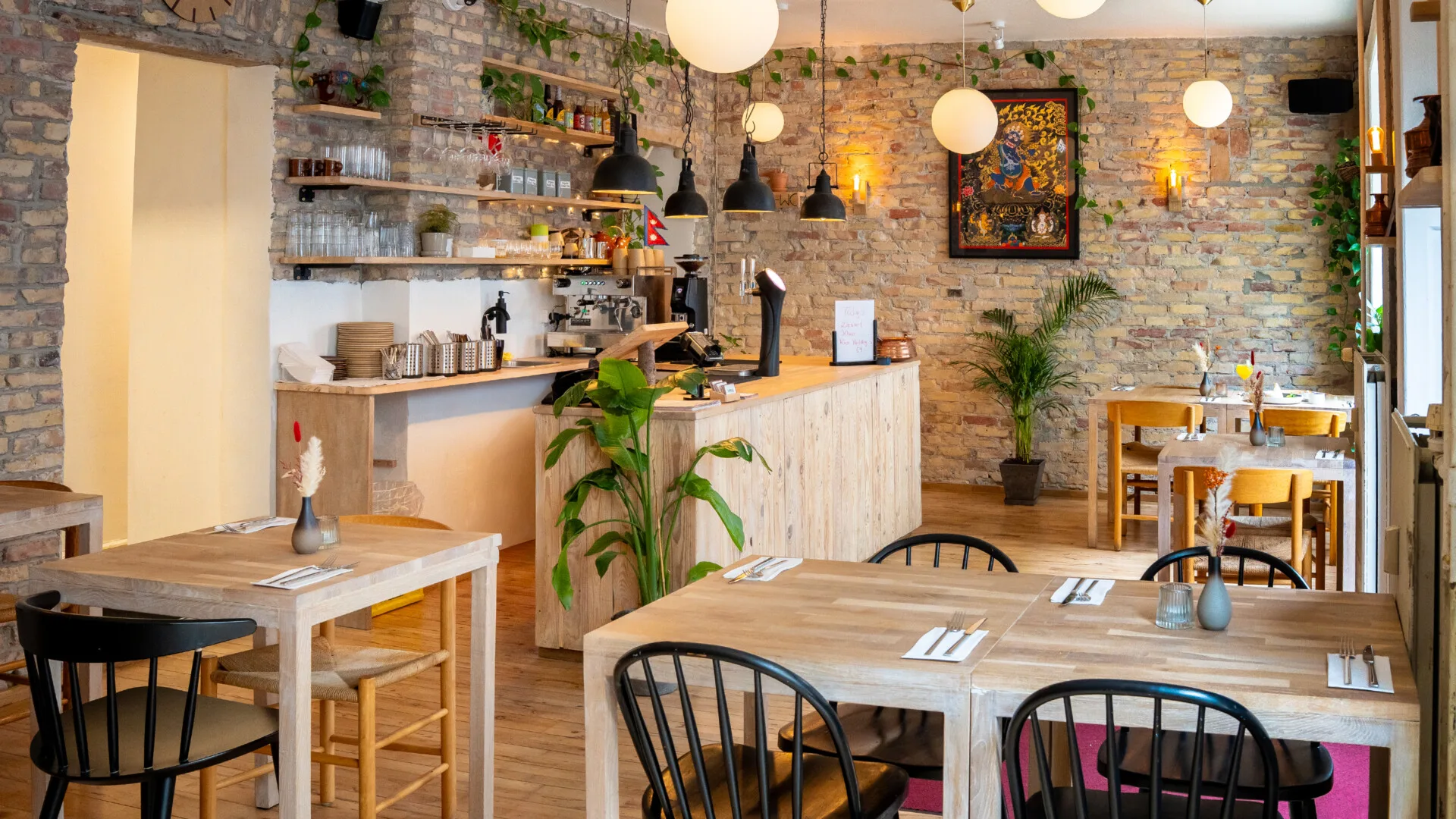
There is a moment, somewhere around the third dumpling, when people stop talking. The basket arrives still steaming, the chutney is deep red and glossy, and the first bite releases a small burst of broth that was never mentioned on the menu. That silence is the most reliable review momo has ever received.
Momo is Nepal’s national obsession. It is eaten in Kathmandu office districts at lunchtime, sold from tin carts outside schools, served at weddings, and made at home on Saturdays by entire families sitting around a table folding together. No other dish carries that much daily affection.
This guide covers where momo came from, why Nepal fell in love with it, the different varieties you will encounter, and where to find genuinely handmade momo in Copenhagen. If you have been hunting for the best momo in Copenhagen, start here.
Momo at a glance
- What it is: a hand-folded Nepali dumpling with a juicy spiced filling
- Best first order: steamed chicken or vegan momo
- The one people remember: jhol momo, served in spiced sesame-tomato broth
- The secret: roasted tomato and toasted sesame chutney, made in-house
- Where: folded fresh daily at Lamfuz, Turesensgade 6 — book a table
What Is Momo?
Momo is a steamed dumpling made from a thin wheat-flour wrapper folded around a seasoned filling. That description is technically accurate and completely fails to capture the thing itself.
What separates momo from other dumplings is the filling. Nepali momo filling is not just minced meat or vegetables. It is a wet, aromatic mixture bound with finely chopped onion, garlic, ginger, coriander, spring onion and a house spice blend, worked until it holds together. When the dumpling steams, that moisture turns into a small pocket of broth inside the wrapper. That is why experienced momo eaters take a careful first bite rather than a confident one.
The second difference is the chutney. In Nepal, momo without achar is unfinished. The classic accompaniment is a tomato and sesame chutney, made by roasting tomatoes until they blister, toasting sesame seeds, and blending them with garlic, chilli and often a touch of timur pepper. It is nutty, tangy, gently spiced and slightly smoky, and it transforms the dumpling completely.
Is Momo Chinese or Nepali?
The honest answer: the ancestry is Himalayan and Tibetan, but what exists today is unmistakably Nepali.
Dumplings travelled along trade routes across the Himalayas for centuries, arriving in the Kathmandu Valley with Tibetan and Newari traders. Nepal did what it does with every borrowed idea. It kept the shape and rewrote the soul. The filling picked up Nepali spice logic, the chutney appeared, the jhol version was invented, and within a few generations momo stopped being a foreign dish and became the food Nepalis miss most when they live abroad.
So calling momo simply Chinese misses the point in the same way calling pizza simply Middle Eastern flatbread would. The technique travelled. The dish, as you eat it today, is Nepal’s.
Why Nepal Loves Momo So Much
Ask ten Nepalis why momo matters and you will get ten versions of the same answer: it is the food you eat with other people.
Momo is democratic. It costs very little at a street stall and appears on the menu of the most expensive restaurants in Kathmandu, and it is the same dish in both places. It is social, because folding momo at home is a group activity and eating them is naturally shared. It is fast, filling and comforting. And it is endlessly adaptable, which is why buff, chicken, vegetable, paneer, cheese and even chocolate versions all exist.
There is also nostalgia. For the Nepali community in Denmark, a good plate of momo is not just dinner. It is a direct line home. That is a heavy responsibility for a kitchen, and it is one of the reasons we fold ours by hand every single day rather than buying them frozen.
The Different Types of Momo You Should Know
Steamed Momo
The original and still the benchmark. Cooked in a stacked steamer until the wrapper turns translucent and slightly silky. Served plain with chutney on the side. If a kitchen can make excellent steamed momo, it can make everything else. There is nowhere to hide.
Jhol Momo
The showstopper. Steamed momo served submerged in a warm, spiced sesame-tomato broth, garnished with coriander. Jhol means “soup” or “gravy” in Nepali. It is somewhere between a dumpling plate and a bowl of soup, it is impossible to eat neatly, and it is the dish our regulars order when they want to impress a friend. If you only try one variation, make it this one.
Fried Momo (Kothey and Deep-Fried)
Kothey momo are pan-fried on one side so the base crisps while the top stays soft, giving you two textures in one bite. Fully deep-fried momo are crunchier and hold up beautifully with a cold drink. Both are popular evening food in Nepal.
C-Momo (Chilli Momo)
Fried momo tossed in a spicy, tangy sauce with onion and capsicum. Loud, messy and hugely popular with a younger crowd in Kathmandu.
Buff Momo
Buffalo meat is the traditional filling in the Kathmandu Valley and remains the purist’s choice. Richer and deeper in flavour than chicken, with a texture that stands up to the spice blend.
Chicken Momo
The most popular version internationally, and the one most first-time guests choose. Lighter than buff, still juicy, and an ideal starting point.
Vegetable and Vegan Momo
Cabbage, carrot, onion, spring onion, mushroom and herbs, seasoned with the same spice base as the meat versions. Made properly, vegan momo is not a compromise. Plenty of our meat-eating guests order them by choice.
Hand-folded momo, steamed to order, every evening.
Turesensgade 6, central Copenhagen. Doors open at 16:00.
Book a Table Call +45 70 60 56 57 Get DirectionsSteamed vs Fried vs Jhol: Which Should You Order?
A quick guide for your first visit:
- First time eating momo ever? Steamed chicken momo. It is the purest expression of the dish and lets you taste the filling and chutney properly.
- Want the experience people talk about? Jhol momo. The broth is the reason people come back.
- Eating with drinks? Fried momo. The crisp exterior pairs perfectly with a cold beer.
- Dining as a group? Order two or three types and share. This is exactly how momo is eaten in Nepal.
- Plant-based? Vegan momo, then jhol vegan momo if you want the full experience.
You can see the complete range, including sizes and fillings, on our momo and Nepali food menu.
Why Handmade Matters More Than People Realise
Frozen, machine-pressed dumplings are everywhere, and they are not the same product. The wrapper is thicker and doughier because it has to survive freezing. The filling is drier because moisture ruins frozen texture. And because a machine seals rather than folds, you lose the pleated crown that traps steam and keeps the dumpling juicy.
Hand-folding is slow work. Our team rolls and fills momo fresh each day, pleating each one closed so the filling stays sealed and the broth forms inside during steaming. It is the least efficient thing we do and the least negotiable.
You can taste the difference immediately: a thinner wrapper that gives rather than resists, a filling that is still moist, and that first small rush of broth. Guests looking for handmade dumplings in Copenhagen usually notice it before they can explain it.
The Chutney: Nepal’s Secret Weapon
Our signature sesame and tomato chutney is made in-house and it is the element guests ask about most often. Tomatoes are roasted until the skins blister and the sugars concentrate. Sesame seeds are toasted separately until they smell nutty. Garlic, ginger, dried chilli and timur pepper go in, and everything is ground into a thick, glossy sauce with real depth.
It is not a dipping sauce in the Western sense. It is a component of the dish. Skip it and you are eating a different, lesser meal. Many guests end up asking for extra, and we are never surprised.
Are Momo Healthy?
Steamed momo are one of the more sensible things you can order at a restaurant. They are steamed rather than fried, portion-controlled by nature, and built around lean protein and vegetables rather than heavy sauces or cream. The chutney is vegetable and seed based rather than dairy based.
Fried and c-momo are naturally richer, and jhol momo sits comfortably in the middle. If you are watching what you eat, steamed vegetable or chicken momo with chutney is a genuinely balanced meal.
Where to Eat Handmade Momo in Copenhagen
We are at Turesensgade 6, st. tv, 1368 København K, a short walk from Nørreport Station in the heart of the city. Momo is the most ordered dish on our menu, and it is folded fresh in our kitchen every day we are open.
Visit Us
- Address: Turesensgade 6, st. tv, 1368 København K, Denmark
- Phone: +45 70 60 56 57
- Email: info@lamfuz.com
- Opening hours: Monday to Thursday 16:00–23:00, Friday and Saturday 16:00–23:30. Last food orders 22:00, last arrival 21:30.
- Google Business Profile: See Lamfuz on Google Maps
- Directions: Get one-tap directions
- Reservations: Book your table online
Momo travels well, so the full menu is available for takeaway. Order by phone or drop in, and we will have it freshly steamed for collection. If momo has convinced you to explore further, read our guide to authentic Nepali dining in Copenhagen, or learn more about our kitchen and our story.
Frequently Asked Questions
Everything you wanted to know about Nepal’s favourite dumpling. Tap a question to open it.
What is momo?
Momo is a Nepali steamed dumpling made from a thin wheat wrapper folded around a seasoned filling of meat or vegetables mixed with onion, garlic, ginger, coriander and house spices. It is served with a roasted tomato and sesame chutney and is Nepal’s most popular comfort food.
Is momo Chinese or Nepali?
The dumpling technique arrived in Nepal via Himalayan and Tibetan trade routes, but the dish as it exists today — with its wet spiced filling, sesame-tomato chutney and jhol variation — is distinctly Nepali.
What is Jhol Momo?
Jhol momo are steamed dumplings served in a warm, spiced sesame and tomato broth. Jhol means soup or gravy in Nepali. It is one of the most loved variations and a guest favourite here. See it on the momo menu.
Are momo spicy?
The dumplings themselves are gently spiced rather than hot. Most of the heat comes from the chutney, which can be enjoyed in small amounts or skipped entirely. Tell your server your preference and the kitchen will adjust.
Can I get vegetarian or vegan momo?
Yes. We fold vegetarian and vegan momo by hand daily, filled with cabbage, carrot, onion, spring onion and herbs seasoned with the same spice base as the meat versions. Browse the vegan options on our menu.
Where can I eat handmade momo in Copenhagen?
At Lamfuz, Turesensgade 6, st. tv, 1368 København K, near Nørreport Station. Our momo are hand-folded fresh every day. Find us on Google Maps, get directions, or call +45 70 60 56 57.
What sauce is served with Nepali momo?
Traditional Nepali momo is served with achar, most commonly a roasted tomato and toasted sesame chutney blended with garlic, ginger, chilli and timur pepper. Ours is made in-house and is nutty, tangy and lightly smoky.
Can I order momo as takeaway?
Yes, the full menu is available for takeaway and momo travel particularly well. Call +45 70 60 56 57 or drop in, and we will have them freshly steamed for collection. Prefer to dine in? Book a table here.
Come for the momo. Stay for the experience.
Folded by hand, steamed to order, served with our signature chutney.
Reserve Your Table Call Us Now Get Directions